The Platform Effect: How New Transit Lines Are Redrawing the Map for Local Business
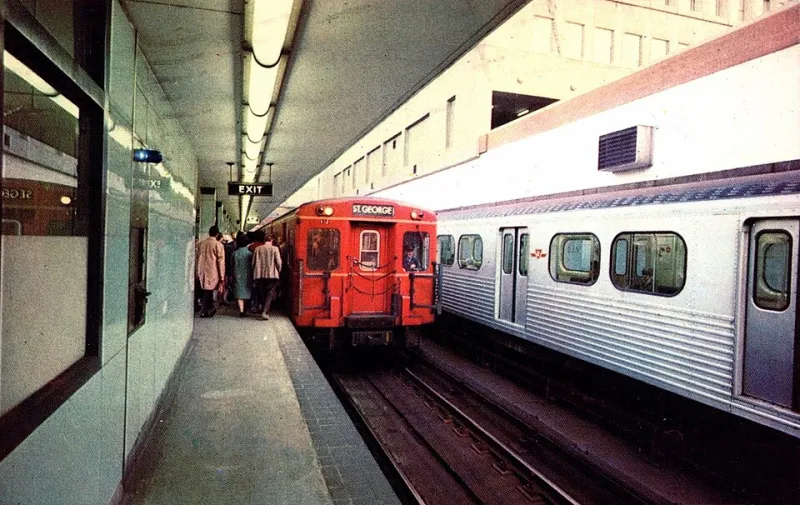
Photo: Royal Specialty; Printed by Plastichrome, Public domain, via Wikimedia Commons
Ask any commercial realtor in this city what the hottest retail question of the decade is, and it won't be about a neighbourhood — it'll be about a station.
The massive transit build-out now reshaping Toronto — the Ontario Line cutting through downtown, the long-awaited Crosstown along Eglinton, and the expansions rippling out to Scarborough and beyond — isn't just a transportation story. It's a business-location story. And the decisions entrepreneurs are making right now will define the city's commercial geography for a generation.
The Old Playbook: Follow the Crowd
For decades, opening a shop in Toronto meant a simple calculus: go where the foot traffic already is. Downtown core, Bloor Street, Yonge — pay the rent, fight for the space, hope the volume covers it.
Transit is scrambling that logic. A new station stop can transform a quiet stretch of storefronts into a pedestrian corridor almost overnight. Business owners who sign leases ahead of the crowds are, in effect, buying tomorrow's foot traffic at today's prices. It's the oldest arbitrage in real estate, and the savviest independent operators know it.
The Eglinton Lesson: Patience Required
The Crosstown has been a masterclass in the risks. Businesses along the construction zones spent years dealing with lane closures, dust, and access headaches — some didn't survive the wait. The lesson for the Ontario Line corridors is sobering: transit can lift a street, but the road there can break a small operator first.
Local business associations along Eglinton have pushed for better construction mitigation ever since, and their advocacy is now a template for merchants on streets like Ossington, Queen, and the Don Valley approaches. Rent freezes, marketing funds, and coordinated signage are the new survival kit.
Where the Smart Money Is Looking
Talk to entrepreneurs scouting locations and a pattern emerges:
- Station-adjacent, not station-front. The priciest corners go to chains. Independents are hunting two or three blocks out, where rents haven't caught up but the walking traffic will.
- Second-floor renaissance. With ground-floor rents climbing, more cafés, studios, and clinics are taking upper floors near future stations — betting that transit makes stairs irrelevant.
- Service over retail. Dentists, barbers, and tutors care less about walk-by traffic than about being a five-minute walk from a station. That changes the whole tenant mix of a corridor.
The Big Question: Spreader or Magnet?
Here's where the optimists and skeptics part ways.
The hopeful view: better transit lets people live in Scarborough, Etobicoke, or North York and reach jobs and businesses across the region — spreading opportunity outward, easing the downtown chokehold, letting neighbourhood main streets thrive on their own terms.
The pessimistic view: transit is a spotlight, and spotlights raise rents. Improved access can accelerate gentrification, push out the very independent businesses that gave a street its character, and funnel even more spending toward prime locations. A station that doubles a street's foot traffic can just as easily double its lease rates.
The honest answer is that both things happen at once, and which one wins depends on policy as much as economics. Commercial rent protections, small-business supports during construction, and zoning that favours independents over chains will decide whether new stations seed local entrepreneurship or just new franchise outposts.
What It Means for the Rest of Us
For residents, the practical takeaway is simple: the streets around new stations are where the next decade's favourite cafés, bakeries, and shops will open — and the time to discover them is before the crowds do.
For entrepreneurs, the window is now. The corridors are mapped, the rents haven't fully adjusted, and the businesses that plant their flags early will own the corner when the trains start running.
Toronto has spent decades talking about becoming a truly transit-connected city. That future is finally under construction. What gets built around it — independent or interchangeable — is still up for grabs.