Sweat Local: Why GTA Fitness Fans Are Ditching the Big Chains for Neighbourhood Gyms That Actually Know Your Name
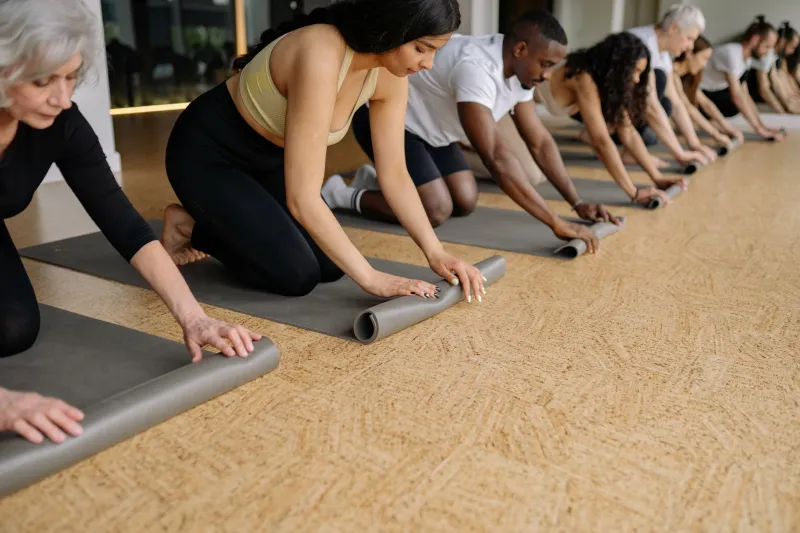
Walk past the right storefront in Leslieville, Weston, or Oakville on a Tuesday morning and you might hear it — the clang of a barbell, the rhythm of a spin class, or the quiet instruction of a yoga teacher guiding a group of regulars through a flow they've all done together dozens of times. It doesn't look like a big-box gym. It probably doesn't have a smoothie bar or a row of unused ellipticals facing a TV wall. But for a growing number of GTA residents, these smaller, scrappier fitness spaces are exactly what they've been looking for.
Boutique gyms, CrossFit affiliates, independent yoga studios, and community-focused training facilities are popping up across Toronto's diverse neighbourhoods — and they're doing surprisingly well in a market that's been dominated for years by corporate fitness chains.
The Rise of the Local Fitness Scene
The GTA fitness industry took a serious hit during the pandemic. Lockdowns forced closures, memberships evaporated, and plenty of independent operators wondered if they'd ever reopen. But something unexpected happened on the other side of all that disruption: people started craving connection. Not just exercise — actual human connection.
"When we reopened, the members who came back weren't just coming to work out," says Marcus Delgado, who co-owns a strength and conditioning gym in Scarborough's Kingston Road corridor. "They were coming because they missed each other. That told us everything about what we were actually selling."
What Marcus is describing isn't unique to his gym. Across the GTA, independent fitness business owners are finding that the thing that differentiates them from a 24-hour chain isn't equipment or price — it's the relationships built inside four walls.
Small Spaces, Big Personalities
Boutique fitness works partly because of scale. When a gym has 40 members instead of 400, the coach knows who tweaked their shoulder last month, who's training for their first half-marathon, and who needs a nudge versus who needs space. That level of personalisation is nearly impossible to replicate in a facility built around throughput.
In Etobicoke, a women-only boxing studio has built a loyal following by offering something beyond technique — it's become a support network for members juggling careers, families, and everything in between. "We celebrate each other's wins here," says owner Priya Nanthakumar. "Someone gets a promotion, someone finishes their first fight night — we all feel it."
Over in the Junction Triangle, a CrossFit box that's been operating for nearly a decade has become something of a neighbourhood institution. Members organize weekend hikes together, show up to each other's events, and yes, they train hard — but the community is the product as much as the programming.
This isn't accidental. Many independent gym owners deliberately cap membership numbers to protect the culture they've built. It's a counterintuitive business decision that often pays off in retention rates that would make a corporate gym exec jealous.
The Economics of Going Independent
Running a small fitness business in the GTA isn't without its challenges. Commercial rent in Toronto proper has pushed some operators into industrial pockets of Etobicoke, North York, and Scarborough — which, interestingly, has helped some studios build deeper roots in those communities rather than competing in already saturated downtown corridors.
Membership pricing at boutique gyms tends to run higher than big-box chains, and that can be a barrier. But operators are finding creative ways to stay accessible — drop-in rates, community classes, sliding scale pricing in some cases — while making sure the value proposition is clear.
"People will pay more if they feel like they belong somewhere," says fitness business consultant Dana Ferreira, who works with independent operators across the 905. "The mistake a lot of small gyms make is competing on price. The ones that thrive compete on experience."
The data backs this up. Retention at boutique gyms consistently outperforms large chains, and word-of-mouth referrals remain the primary driver of new membership for most independent operators. In a city as neighbourhood-focused as Toronto, that's a genuine competitive advantage.
Yoga, Pilates, and the Wellness Ecosystem
It's not just lifting and high-intensity training driving this movement. Independent yoga studios and Pilates spaces are thriving in neighbourhoods like Bloor West Village, Danforth, and Mississauga's Port Credit. These spaces often double as wellness hubs — hosting workshops, nutrition talks, and community events that extend well beyond a single class.
The studio model has adapted quickly to post-pandemic habits too. Many independent operators now offer hybrid memberships that combine in-person classes with on-demand digital content — not to replace the in-person experience, but to complement it. The goal is to keep members connected to the community even on the days they can't make it in.
What the Big Chains Can't Buy
For all their marketing budgets and app integrations, corporate fitness chains face a genuine challenge when it comes to community. It's not something you can franchise or standardize. It grows organically, over months and years, through shared early mornings and hard workouts and the particular shorthand that develops between people who show up for each other consistently.
That's the real story behind the GTA's neighbourhood fitness boom. It's not a trend driven by aesthetics or Instagram — though both certainly play a role. It's driven by the same thing that makes local restaurants and independent shops thrive in this city: people want to feel like they're part of something, and they're willing to seek it out.
So if you haven't checked out the gym or studio tucked into that commercial strip a few blocks from your house, it might be worth a visit. Chances are, someone in there already knows your neighbour.