Trade What You Know: How GTA Neighbours Are Ditching Cash and Swapping Skills Instead
Your Neighbour Has Something You Need. Turns Out, You Have Something They Need Too.
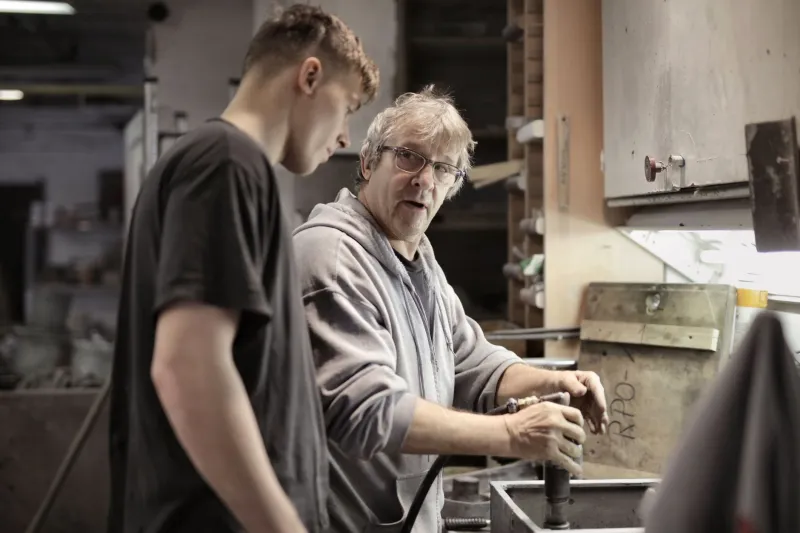
Meet Sandra, a freelance graphic designer living in East York. Last spring, her bathroom grout was looking rough and she had zero interest in paying a contractor's weekend rates. Her neighbour, a retired tile setter named Bogdan, had been meaning to update his small business logo for years but kept putting it off because "good designers cost a fortune."
So they made a deal. Sandra redesigned Bogdan's logo and business cards. Bogdan re-grouted her bathroom and touched up the caulking around the tub. No invoices. No e-transfers. No HST.
Stories like this are playing out all over the GTA — in Facebook groups, WhatsApp threads, community centre bulletin boards, and front porch conversations. Call it bartering, skill-swapping, or just neighbours helping neighbours, but whatever you call it, it's growing. And it's filling some very real gaps in a city where the cost of everything from plumbing to professional services keeps climbing.
Why Barter Is Having a Moment in the GTA
The timing isn't a coincidence. With inflation making routine home repairs and professional services feel like a luxury, GTA residents are getting creative. But this isn't just about saving money — though that's obviously part of it.
It's also about trust.
There's a reason people feel better trading services with a neighbour than hiring a stranger from an app. You know where they live. You've seen their work. You've maybe chatted over the fence. That familiarity lowers the psychological stakes considerably. If something goes sideways, you can walk over and talk about it — no customer service phone tree required.
Community researchers have noted this pattern for years: people are more likely to follow through on informal agreements when there's an existing social relationship at stake. In tight-knit neighbourhoods — and the GTA has plenty of them, from Corso Italia to Scarborough's Agincourt to Mississauga's Streetsville — that social fabric becomes the backbone of a functioning barter economy.
What People Are Actually Trading
The range of services being exchanged might surprise you. Yes, there's a lot of trades-for-trades action — a plumber swapping a fix with a carpenter, an electrician trading a panel inspection for drywall work. But the barter economy in the GTA goes way beyond home improvement.
Some common exchanges happening right now in GTA communities:
- Childcare for meal prep. Parents with complementary schedules watch each other's kids on alternating days, while one parent handles a week's worth of batch cooking for both households.
- Photography for bookkeeping. A freelance photographer shoots a small business owner's product catalogue in exchange for quarterly bookkeeping help.
- Language tutoring for fitness training. A certified personal trainer swaps sessions with a French tutor trying to get her kids into an immersion programme.
- Web design for legal advice. A small business owner builds a website for a paralegal who reviews their lease agreement in return.
The common thread? Both people have something the other genuinely needs, and both are skilled enough that the exchange feels fair.
How These Networks Actually Form
Most barter circles in the GTA don't start with a formal structure. They usually begin with one conversation — often in a neighbourhood Facebook group, a community WhatsApp chat, or a school parent council meeting.
Someone posts that they're a plumber looking for help with their taxes. An accountant sees it and replies. Word spreads. A few more people join the thread. Before long, there's a loose network of a dozen or so neighbours who know what everyone else does for a living and aren't shy about asking for a swap.
Some communities have taken it further. There are informal "skill banks" operating in parts of Toronto, Hamilton, and Brampton where residents log what they can offer and what they need, with a loose point system to keep things roughly balanced over time. These aren't formal time banks (though those exist too) — they're more like a neighbourhood spreadsheet maintained by a volunteer coordinator.
A few tips from people running these kinds of informal networks:
Start with people you already know. Don't try to build a barter circle from scratch with strangers. Begin with two or three neighbours you trust and let it grow organically.
Be specific about what you're offering. "I can help with tech stuff" is vague. "I can set up your home network, troubleshoot your laptop, and help you migrate your files" is something people can actually use.
Agree on scope before you start. One of the most common friction points in barter arrangements is scope creep. Make sure both parties are clear on exactly what's included in the exchange before anyone picks up a tool or opens a laptop.
Don't try to make it perfectly equal in one shot. The best barter relationships are ongoing. If your neighbour does something that took them four hours and you can only offer two hours of your time right now, that's okay — you can balance it out next time.
The Part Nobody Talks About: Taxes
Quick note for anyone who barters as part of a business or side income: the Canada Revenue Agency does have rules about bartering. If you're exchanging services in the course of your business, the fair market value of what you receive is generally considered taxable income. For purely personal, neighbour-to-neighbour exchanges, most people don't report it — but if you're a registered business doing significant barter exchanges, it's worth a conversation with your accountant. (Who you might be able to find through your barter circle, naturally.)
How to Find or Start a Skill Swap in Your GTA Neighbourhood
Ready to get in on it? Here's where to look:
- Nextdoor and local Facebook groups are the most active hubs for informal skill trading in most GTA neighbourhoods. Search your area name plus "skill swap," "help exchange," or just post what you're looking for.
- Community centres and libraries in Toronto, Mississauga, Brampton, and beyond often host or know about local time banks and skill-sharing programmes.
- School communities — parent councils and school WhatsApp groups are goldmines for this kind of thing, especially among parents with young kids.
- Your building or street. Sometimes the simplest move is putting a note in the elevator or mailroom: "I'm a bookkeeper. Looking to swap for handyman help. Apartment 4B."
The GTA is full of people who are genuinely good at things and genuinely need things. The barter economy is just what happens when those two groups find each other — no app required, no service fee, no waiting on hold.
Sometimes the best local economy is the one already living on your street.